9916 stories
·
100 followers

FCC Abolishes Gigabit Speed Goal, Suggesting It Is Unfair To Slower Technologies

1 Share
An anonymous reader quotes a report from Ars Technica: The Federal Communications Commission last week eliminated the gigabit speed goal established during the Biden administration and declared that current levels of broadband deployment in the US are acceptable. Though fiber networks have routinely offered such speeds for years, the FCC said the gigabit speed goal is not "technologically neutral," suggesting that it isn't fair to other, slower technologies. In 2024, the FCC raised its broadband benchmark to 100Mbps downstream and 20Mbps upstream, setting the new standard by which to judge whether deployment is reasonable and timely. The FCC at the time also set a long-term speed goal of 1Gbps download speeds paired with 500Mbps upload speeds, saying it would use the goal "as a guidepost for evaluating our efforts to encourage deployment." Republican Brendan Carr, who is now the FCC chairman, never liked that long-term goal. He proposed abolishing it last year, and the change was finalized on August 14 in the FCC's latest broadband deployment report. The reports are mandated by Section 706 of the Telecommunications Act. "As part of our return to following the plain language of Section 706, we adopt our proposal from the Notice [of Inquiry] to abolish without replacement the long-term goal of 1,000/500 Mbps established in the 2024 Report," the order said. "A long-term goal is not mentioned in Section 706 and could appear to violate our obligation to conduct our analysis in a technologically neutral manner. At present, it is impossible to predict long-term technological developments and the evolution of consumer preferences." The FCC said that comments submitted by cable industry group NCTA and wireless industry group CTIA "support our reasoning for abolishing the long-term goal." Last year, the Brendan Carr-led FCC said (PDF) that the gigabit goal "may be unreasonably prejudicial to technologies such as satellite and fixed wireless that presently do not support such speeds." However, last week's report contradicts that stance. "We disagree with commenters arguing that our concern about technological neutrality merely serves to accommodate technologies that may currently offer slower speeds," the FCC said. "At present, we do not know the nature of future consumer preferences and, considering that the goal is not required by the statute and does not serve any positive purpose (as discussed herein), we believe it prudent to abolish it."

Read more of this story at Slashdot.

Read the whole story
InShaneee
12 minutes ago
reply
Chicago, IL
Share this story
Delete

Weird Al Yankovic finally brings some parodies to the Tiny Desk

1 Share

“Weird Al” Yankovic was actually on the forefront of NPR’s Tiny Desk Concerts. The series began in 2008, and he had an episode by 2010. Back then, the series had a bit more indie cred, and Yankovic opted not to do the parodies on which he made his name, but some original songs. But now, in a post-Taylor Swift, post-Dua Lipa, post-Charlie Puth Tiny Desk world, Al has returned willing to offer some old parodies for our troubled times. 

The new set, which NPR shared this morning, features two parodies that longtime Al-coholics are certainly well acquainted with. There’s “eBay,” a parody of the Backstreet Boys’ “I Want It That Way,” and “The Saga Begins,” Yankovic’s retelling of The Phantom Menace as set to Don McLean’s “American Pie.” The latter, Al suspects, is the first time he’s performed it not in a Jedi robe but in his civilian attire—but such is the magic of a Tiny Desk set. Yankovic also performs his “Emmy-losing closing-credits blues-rock jam” “Now You Know” from his totally factual biopic Weird: The Al Yankovic Story and his Weezer pastiche “Skipper Dan.” It seems it may take another 16 years before we get the chance to hear “Amish Paradise” or “White And Nerdy” from NPR’s studios, but at least we have this latest set to tide us over in the meantime. 


Read the whole story
InShaneee
12 minutes ago
reply
Chicago, IL
Share this story
Delete

You Can Finally Buy a Fairphone In the US

1 Share
An anonymous reader quotes a report from Wired: Your iPhone, SamsungGalaxy, andGoogle Pixel have a 1-year warranty. Unless you cough up extra dough for an extended service plan, you'll pay a hefty fee if you damage the screen and need a replacement (around $329 for aniPhone 17done directly fromApple). But it doesn't have to be this way. What if you could order the part from the manufacturer and do the repair yourself? That dream is finally being realized for American consumers, thanks to Fairphone. The Dutch company is bringing its repairable and sustainably built Android smartphone -- the Fairphone (Gen 6+) -- to the US. Each one comes with a screwdriver. A replacement screen from Fairphone costs just $90. A new USB-C port is $20. A fresh battery is $40. In all, there are 12 modular elements you can swap yourself. It remains the only smartphone series with a 10/10 repairability scorefrom iFixit, not to mention an unmatched 5-year warranty and software updates through 2033. The new Fairphone (Gen 6+) is a small upgrade over the Gen 6 that the company launched last year. It has a newer Qualcomm Snapdragon 7s Gen 4 processor and double the RAM at 12 GB, but is otherwise largely the same device (hence the "plus" in the name). It now comes in Cobalt Blue, a nod to the miners who extract the cobalt used to make phone batteries, and the company's efforts to improve working conditions in mines in the Democratic Republic of Congo. The new Fairphone is available on Amazon and at Fairphone.com for $650, and it's officially certified to work on T-Mobile and AT&T's networks. While this will mark the U.S. debut of its flagship smartphone, the company first entered the stateside market last year with its repairable earbuds and headphones. It also plans to launch its next-generation Fairbuds 2 wireless earbuds later this year.

Read more of this story at Slashdot.

Read the whole story
InShaneee
2 days ago
reply
Chicago, IL
Share this story
Delete

The National Park Service Is Using Flock. Rangers Are Pissed

2 Shares
The National Park Service Is Using Flock. Rangers Are Pissed

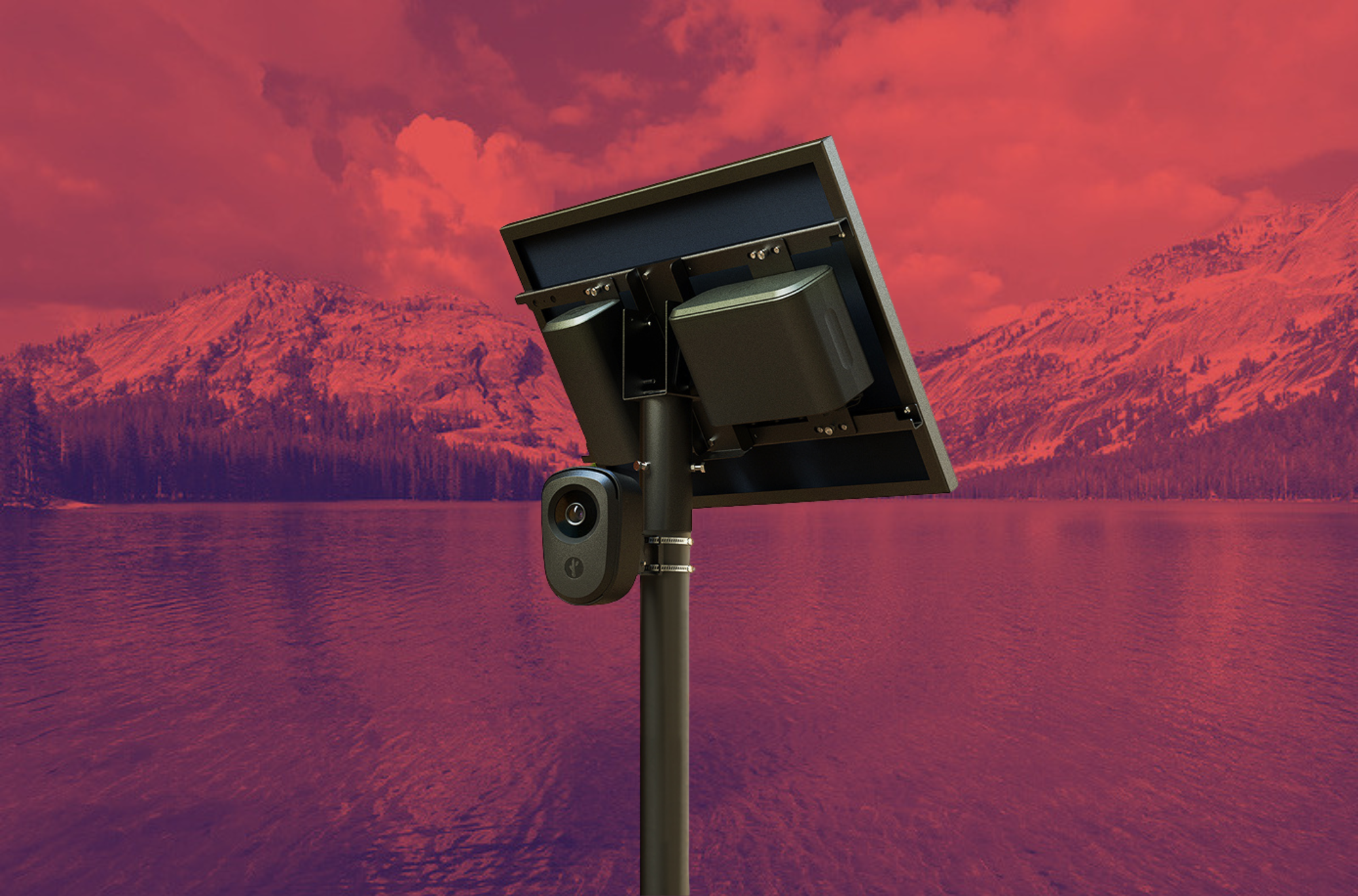
The National Park Service (NPS), the agency tasked with managing the U.S. national parks and monuments, has purchased Flock cameras and had them installed at parks including in Yosemite.

Current and former NPS rangers are not happy about it.

“Flock protects property, not people or parks. People should be free to recreate in ways that are respectful to the ecosystem — but the surveillance is a disrespectful invasion of privacy,” a current NPS ranger told 404 Media. 404 Media granted the ranger and others anonymity because they weren’t permitted to speak to the press.

💡
Do you know anything else about Flock? I would love to hear from you. Using a non-work device, you can message me securely on Signal at joseph.404 or send me an email at joseph@404media.co.

Another current NPS ranger said, “I just think that every American should be free to visit our national parks without their location being traced and tracked by the federal government. Wild places are at the core of American freedom and nobody should be afraid to visit them.”

A former NPS ranger added, “I think if the public knew that their public lands were being surveilled, they would push back.”

Flock cameras constantly scan the license plate, color, model, make, and other identifying features of every vehicle that drives past, creating a timestamped record of where a vehicle was at a particular time, and by extension, a person. This data is then available to Flock’s law enforcement customers and is usually queried by police without a warrant. Many of Flock’s cameras are part of a national network that other law enforcement officials can then query. For example, a cop in Texas might query the network to look for a specific vehicle and search cameras across the country. This, among increased reporting of cops abusing their access to Flock to stalk people with no legitimate investigative purpose, and local cops performing lookups for ICE, has contributed to a nationwide conversation around Flock and whether communities want the company’s cameras in their neighborhoods.

Flock cameras are installed inside Yosemite, WBTW News 13 reported earlier this month. The outlet referenced data from DeFlock, an open source map of Flock and other automatic license plate reader (ALPR) locations. 

There is also a Flock camera on a road towards the Golden Gate National Recreation Area, according to the data.

NPS also plans to install cameras from Verkada, a controversial company with a history of abusing its own products and whose products sometimes have facial detection capabilities, according to an internal NPS document viewed by 404 Media.

The NPS told 404 Media in a statement: “Yosemite National Park uses a traffic-monitoring system to measure vehicle counts, travel times and entrance-station wait times. The system helps the park better understand traffic conditions and provide visitors with information to help them make informed decisions about when to visit and where parking is available. The cameras are not connected to law enforcement or DMV databases.”

One of the current rangers said, “Last year Yosemite changed the rules about hanging flags on El Capitan and tried to backdate the rule change to make it look like the people involved had committed a crime. What happens when that sort of malfeasance is combined with the ability to track any park visitor's location, anywhere in the country? If that happens, we are no longer free in this country.”

They added, “I fear for the day when a visitor's National Park experience is interrupted by being pulled over and held at gunpoint because a license plate reader misread their plate.”

Read the whole story
InShaneee
2 days ago
reply
Chicago, IL
Share this story
Delete

We Tracked a Shipment of Rare Books. It Ended at an Amazon AI Training Facility

1 Share
We Tracked a Shipment of Rare Books. It Ended at an Amazon AI Training Facility

Amazon is buying massive quantities of books, scanning them for AI training data, and destroying them in the process. 

A 404 Media investigation was able to reveal Amazon’s book buying operation, which hasn’t been previously reported, by placing a tracking device in a rare book we suspected would be acquired by an AI company for training data, and following it around the country to its final destination. 

📖
Do you know work at a facility where you scan books? I would love to hear from you. Using a non-work device, you can message me securely on Signal at @emanuel.404. Otherwise, send me an email at emanuel@404media.co.

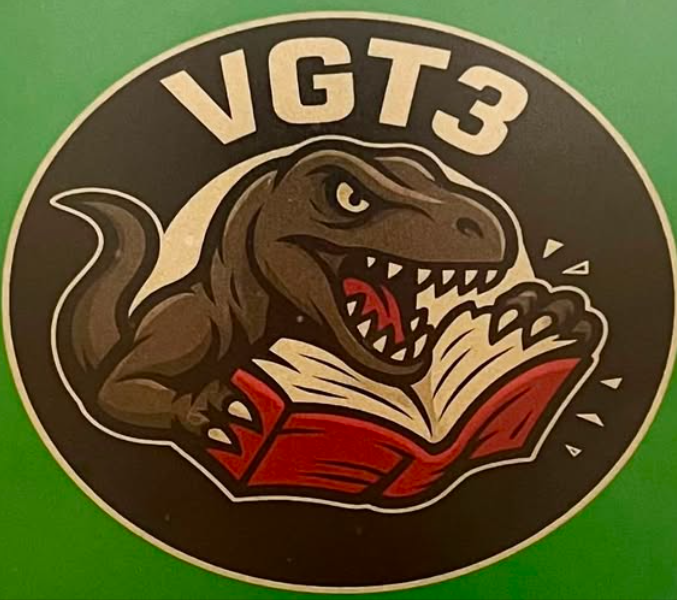
That final destination was an Amazon warehouse in Las Vegas, Nevada. Amazon employees who work at this location say all they do is receive massive shipments of printed books which they then cut the bindings off in order to scan the books more quickly. The printed book is destroyed in the process. The logo of the Amazon team that works at this warehouse, called VGT3, is a dinosaur, brandishing its teeth and with a book in its hands.

Read the whole story
InShaneee
2 days ago
reply
Chicago, IL
Share this story
Delete

Twitch is Mining Peoples' Streams to Train Amazon's AI

1 Share
Twitch is Mining Peoples' Streams to Train Amazon's AI

Twitch is going to train Amazon’s AI models on streamers’ content unless they deliberately go into their settings and opt out, potentially sweeping up a wealth of streamers who either don’t hear about the announcement or follow steps stop it.

On Wednesday Twitch announced a new setting that lets streamers opt-out of the training. The announcement confirms rumors that have percolated over the last week: It is using streamers to train Amazon’s AI models. 

The new toggle says, "Allow your channel content to train generative AI content models at Amazon." All users are opted in by default. It's located at the bottom of users' security settings page

"If you opt-out and decide to not allow your channel content to train Generative AI content models, your streams, VODs, clips, stream chats, and pictures and text on your channel will not be used in future training of a model developed by Amazon whose purpose is to generate or synthesize text, audio, images, or video," Twitch, which is owned by Amazon, says in its new FAQ section about generative AI.

"Opting-out of training generative AI content models does not opt you out of all AI or machine learning uses at Twitch," Twitch's support page says. "For example, Twitch will still run AutoMod, which helps keep our community safe, but does not retain your data and use it to produce content. Twitch may also still use your data to run AI-supported features, like captions, which automatically generate captions for your Clips but does not retain your stream or your clips to train a model that can generate new content." 

Twitch is positioning this setting as a favor to users. "We've added a setting that lets you opt out of having your channel content used to train generative AI content models across Amazon," the platform posted on X Wednesday. In practice, Twitch makes this choice for users unless they know about the new setting and proactively turn it off. This was the case on my own Twitch account, and users on social media are reporting the same.

Twitch executives have been talking about using streamers' content to train AI for years. In 2024, Twitch Chief Monetization Officer Mike Minton said Twitch has a “role to play” in training Amazon's generative AI models, adding that Twitch content was already being used “in a prototyping, not in any kind of production scale, capacity.”

Amazon did not immediately respond to a request for comment. Twitch's publicly available press email repeatedly bounced.

Read the whole story
InShaneee
7 days ago
reply
Chicago, IL
Share this story
Delete
Next Page of Stories