9760 stories
·
100 followers

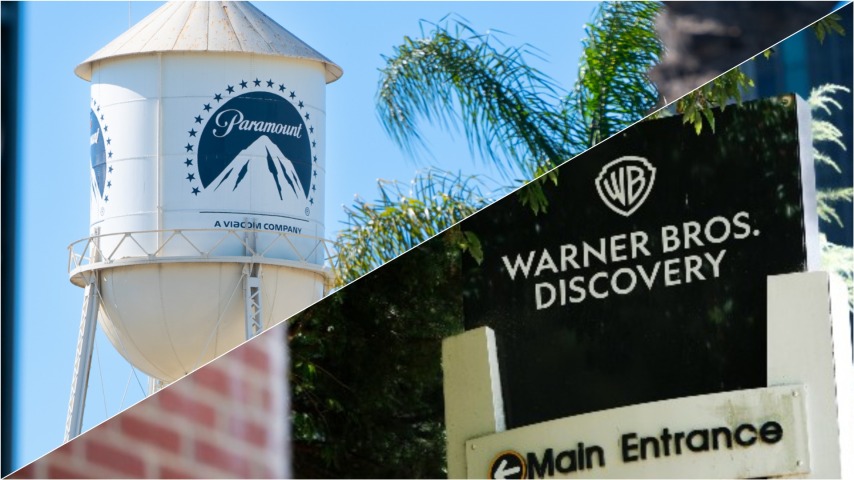
Paramount has $24 billion in Middle East sovereign wealth funds for WBD purchase

1 Share

We’ve been hearing for months that Paramount was trying to finance its purchase of Warner Bros. Discovery with money it didn’t actually have, and that sovereign wealth funds from Middle Eastern countries would help make up the difference. Now, we have some confirmed information. That difference is just shy of $24 billion, The Wall Street Journal reports. Yes, that’s “billion” with a “B.” About $10 billion of that is coming from Saudi Arabia, with Qatar and the Emirate of Abu Dhabi providing the rest. All said, Paramount, under the direction of David Ellison, is set to spend $81 million on WBD. 

Per WSJ, the $24 billion investment isn’t expected to trigger any kind of investigation with the Committee on Foreign Investment in the U.S. or to trigger a review by the FCC, which has its hands far too full with documenting what Joy Behar says on daytime television. Officially, this element of the deal will avoid these investigations because each entity will own less than 25% of the entire entity, not because of Paramount’s willingness to help the Trump administration. Still, $24 billion sounds like a hell of a lot of money no matter how you slice it, even if the countries providing those funds won’t officially have voting rights in the potential mega-corporation that would own both CBS News and CNN. 

Given the size of the deal, it won’t just need approval in the United States, however. The regulatory review for the deal is still pending in Europe, and it’s unclear whether the regulatory bodies on that side of the Atlantic will be quite so chill about this whole thing. 

Read the whole story
InShaneee
41 minutes ago
reply
Chicago, IL
Share this story
Delete

Indie filmmakers are fighting the Marvelfication of video game movies

1 Share

The biggest question following The Super Mario Bros. Galaxy Movie‘s box-office blowout isn’t whether or not it works as a movie, but how its financial haul will affect the future of video game movies. The movie’s record-breaking success—the biggest Wednesday opening in April of all time!—suggests that the audience for AAA video game adaptations like The Super Mario Bros. Movie ($1.36 billion at the global box office) and A Minecraft Movie ($961 million) don’t mind that those movies often feel like narrative-light Easter egg hunts. But the bigger these movies get, the closer they get to the Marvel Cinematic Universe, IP-forward products made by board rooms rather than filmmakers.

Nintendo Executive Fellow Shigeru Miyamoto has said that he’s very interested in using cross-media projects like The Super Mario Bros. Movie to appeal to people who don’t play video games, which may explain why both Mario movies are so impersonal and soulless that they’re only really valuable as brand maintenance. On the flip side, YouTuber-turned-filmmaker Mark Fischbach’s surprising financial success with his claustrophobic indie sci-fi chiller Iron Lung suggests that when it comes to video game adaptations, smaller might be better, both in terms of quality and maybe even profitability. 

Fischbach’s detailed and faithful adaptation works as well as it does because he didn’t try to force it to be all things to all people. It went on to gross $50 million on a reported budget of three to four million dollars. Granted, Fischbach’s established online fanbase helped to put his adaptation of David Szymanski’s 2022 Lovecraftian submersible simulator over the top, especially since it didn’t have a traditional advertising budget. But as far as the creative process went, Fischbach was likely helped considerably by the fact that Szymanski was the original game’s solo developer, making him a lot easier to work with than a AAA gaming juggernaut. Szymanski has said that he was happy to give Fischbach direct feedback on his adaptation, personally advising him on the screenplay and giving him support during the movie’s pre-production phase.

So if that’s possible, why do the most prominent AAA game adaptations seem made by a MCU-style committee?

“The fundamental rule that Hollywood operates by is: As budgets approach infinity, the audience’s intelligence required to understand it approaches zero,” screenwriter C. Robert Cargill tells The A.V. Club. Cargill has worked on both video game adaptations—like unproduced films of Deus Ex: Human Revolution and Resident Evil that he co-developed with Black Phone 2 director Scott Derrickson—and comic book movies like Doctor Strange. Cargill argues that there’s now more creative freedom in adapting video games than there is in adapting comic book movies. For writers like Cargill, collaborating with Marvel is like accepting a pair of golden handcuffs. “You absolutely wanna work for them because everyone’s gonna see those movies,” he says. “But at the same time, there’s a lot of limitations to working in a cinematic universe like that. You can’t make a story choice on a whim because that may contradict something that has already been shot for a Disney+ show. You don’t have that problem in a video game movie.”

At the same time, video game writers and developers aren’t recognized by film industry unions like the Writers Guild Of America, making it easier for big companies, those that spend over $300 million to develop a AAA game, to treat movie adaptations like brand extensions instead of self-sufficient works of pop art. Take last year’s Until Dawn adaptation, a generic Cabin-In-The-Woods-meets-Groundhog-Day horror pastiche that had little to do with Supermassive’s popular and BAFTA-winning horror game. The original game’s writers, indie horror filmmakers Larry Fessenden and Graham Reznick, weren’t mentioned in the movie’s end credits, where Until Dawn is said only to be “based on the Playstation Studios video game.” The brand is the most important thing, just like how Marvel and DC Comics adaptations focus more on introducing and showcasing their characters rather than the stories (not to mention writers and artists) that helped to establish those characters in the first place.

When I previously reported on Fessenden and Reznick’s lack of credit for the Until Dawn movie, I was told that a “written by” credit was only guaranteed as part of a union contract with movie studios, according to WGA West Board Of Directors member Rob Foreman. Emailing with me last year, Foreman said that “in video games, that kind of guarantee and protection doesn’t currently exist, so credit can be more arbitrarily determined by individual game companies.”

Some indie movie producers are trying to level that drastically uneven playing field. Game writer and podcaster Alanah Pearce recently announced that her new production studio, Charred Pictures, would work closely with indie video game developers on forthcoming movie adaptations like the survival horror trilogy Faith: The Unholy Trinity and the first-person psychological horror game Dead Take. “I don’t think it makes any sense at all for an adapted screenplay not to include direct input from the writers of the original source material,” Pearce tells The A.V. Club. “It’s their world—they created the story, the characters, and the plot that has resonated with the audience so much. They know it better than anyone else.”

Some recent horror video game adaptations, like the supernatural psychodrama The Mortuary Assistant, suggest that Pearce might be on to something. The Mortuary Assistant was directed by Jeremiah Kipp and co-adapted by the game’s original solo developer Brian Clarke. Kipp had previously collaborated on several Fessenden-produced indie horror titles, so he knew about Fessenden and Reznick’s lack of recognition for Until Dawn—something that gave him extra motivation to seek out Clarke’s advice. Better yet, Clarke ensured that Kipp and his co-writer Tracee Beebe maintained creative control over their adaptation, since their movie was produced by Epic Pictures Group, which owns the publishing company that made the game in the first place, DreadXP. “Epic really wanted Brian to be happy, and he protected me,” Kipp tells The A.V. Club. “When I was brought on, Brian called me up right away to say, ‘The best way to honor this game is for you to make a good movie.'”

Clarke recalls that while Epic Pictures provided some notes throughout the screenwriting process, they mostly suggested ways to better achieve certain storytelling effects. “They never really had heavy opinions when it came to the story itself,” Clarke says. DreadXP also didn’t provide much feedback on the adaptation since, according to Clarke, “that’s not their wheelhouse.” Rather than the by-committee approach of these larger adaptations, it was a direct collaboration.

Conversely, producer-turned-writer-director Genki Kawamura showed his appreciation of the horror-themed walking simulator The Exit 8 by not approaching his movie, Exit 8, like a normal adaptation. That’s partly out of necessity, since Kotake Create’s game doesn’t have a traditional story. Like the game, Kawamura’s movie follows a commuter’s nightmarish journey through a non-descript Japanese subway tunnel that has no traditional exit. Instead, the end of one corridor loops back to its start, like a Möbius Strip or an improbable M.C. Escher design. The only way for the nameless commuter (Kazunari Ninomiya) to escape is by making eight complete circuits of the tunnel, turning back every time he spots an “anomaly” in the tunnel. In Kawamura’s movie, the commuter’s frustrated escape attempts reflect his own tortured mindset after his girlfriend unexpectedly tells him that she’s pregnant and he’s the father. 

“For this movie, we were like architects,” Kawamura tells The A.V. Club. “It was as if Kotake Create gave me the blueprints for a new structure and I, along with my production designers and other collaborators, built something new.”

Ironically, Kawamura took to heart some advice that he received from Nintendo’s Miyamoto, who argued that the key to making a great video game is to make something that’s not only fun for the player to engage with, but also for anyone watching the player. “Sometimes I put the movie’s audience in the player’s shoes,” Kawamura says. “Other times I present the game’s action as if the audience is watching another player’s livestream.”

Kawamura adds that he wouldn’t have enjoyed so much creative freedom if Kotake Create was as big as, say, Nintendo. “The source material is an indie game, so we weren’t interfacing with a giant organization. In reality, it was one person,” referring to Kotake, the company’s solo developer. “So we were able to communicate with him and tap into the purest form of his vision for his game. This direct interaction between creators is what led to this movie’s success.”

While involving video game writers and developers in the adaptation process obviously doesn’t guarantee a better movie, having their support and input usually helps. Just don’t expect the makers of AAA games to learn that lesson any time soon, according to Pearce. 

“When the system is so focused on profit, AAA publishers are always going to want to ensure their writers are writing full-time on video games, and outsource the film production side of things,” Pearce says. Pearce also doesn’t expect the WGA and other movie unions’ recognition of video game writers to change in the near future either. “I do recognize that including video game writers is difficult for the WGA, being that our contracts work so differently,” Pearce says, referring specifically to how most video game writers are full-time, salaried employees while most screenwriters are contract employees. “I have sympathy for how complicated it might be to find terms that recognize these vastly different approaches. But just because something is hard doesn’t mean you shouldn’t do it.” It might be hard to believe that movie studios would ditch the MCU-style approach that helped create the modern superhero boom in favor of something more creative-friendly, but idealistic and dedicated producers like Pearce—and an incoming wave of smaller adaptations—make it easier to imagine a future where better video game adaptations are made with the help and recognition of their original creators.


Read the whole story
InShaneee
1 hour ago
reply
Chicago, IL
Share this story
Delete

'AI' Is Coming For Your Online Gaming Servers Next

1 Share
"Consumer PC parts aren't the only things being gobbled up by the 'AI' industry," writes PCWorld's Michael Crider. "A Starcraft-inspired strategy game is shutting down its multiplayer servers because the hosting company got bought out for 'AI.'" The game will still be playable offline for now, but the shutdown highlights the ripple effects of the AI boom on the gaming industry. Amid the ongoing hardware shortages, AI companies are basically gobbling up as much infrastructure as they can to repurpose it for AI workloads. From the report: The game in question is Stormgate, a crowdfunded revival of the real-time strategy genre that has languished in the last decade or so. The developer Frost Giant Studios told its players on Discord (spotted by PC Gamer) that it would be unable to continue multiplayer access past the end of this month. The "game server orchestration partner" was bought by an AI company -- the developer's words, not mine -- which means that the multiplayer aspects of the game will have a "planned outage." The devs say the game will be patched for offline play, presumably including its single-player campaign mode and co-op modes, but "online modes will not be available at that point." They're hoping to bring back online play in a later update, but that'll depend on "finding a partner to support ongoing operations." That sounds like old-fashioned player-hosted games with lobbies aren't in the cards, at least not yet. Frost Giant's server provider is Hathora, which was bought by a company called Fireworks AI last month. Fireworks describes its offerings as "open-source AI models at blazing speed, optimized for your use case, scaled globally with the Fireworks Inference Cloud." So, yeah, Hathora's infrastructure will likely be used for yet more generative "AI." And according to GamesBeat, it's planning to shut down the game service aspect of its company completely. That means Stormgate probably isn't going to be the last game affected. Hathora also provides online services for Splitgate 2, among others. I'm contacting Hathora for comment and will update this story if I receive a response.

Read more of this story at Slashdot.

Read the whole story
InShaneee
3 days ago
reply
Chicago, IL
Share this story
Delete

Podcast Canon looks back on 30 years of This American Life

1 Share

With Podcast Canon, Benjamin Cannon analyzes the history of podcasts and interrogates how we talk about the art form.

In December of 1995, Your Radio Playhouse broadcast its first episode on Chicago’s NPR affiliate station WBEZ. Though it wasn’t long for this world—by the following year, after just 16 episodes, it would disappear with a startling completeness—Your Radio Playhouse would become perhaps the most important show in the history of modern audio storytelling. That’s because, on March 21st of 1996, its host, Ira Glass, changed the program’s name to This American Life

And so, for this month’s entry into the Podcast Canon, we’re taking a step outside of our usual remit of shining a brighter light on the medium’s unjustly overlooked works and going deep on what is likely the most (justly) recognized work in the world of narrative documentary audio on the event of its 30th anniversary. Or, rather, the 30th anniversary of its renaming.

It might seem a little strange to fixate on something as simple as this change in appellation, but one feels the show wouldn’t exist today without it. Shakespeare may contend that a rose by any other name would smell as sweet, but Your Radio Playhouse just wasn’t something suited for longevity. This American Life is a title as bold as the enterprise itself, one almost purpose-built to endure. That small tweak helped the show become like the audio world equivalent to Saturday Night Live: an institution, guided by a charismatic figurehead with an uncanny ability for finding and fostering incredible talent, which singlehandedly reshaped our entire conception of an artform.

If you’re somehow unaware of the program, I’m overwhelmingly excited for you to discover it. This American Life is a work of narrative audio documentary, each episode runs about an hour long, focusing on a single theme. An episode could be devoted to a single story, or composed of a number of shorter ones, designated as acts. Those are the bare facts of the series, but what that misses is the way that the show’s creative team are simply obsessed with stories and storytelling. As a product of terrestrial radio, the program cracked the code on how to capture an audience’s attention and hold them there to the very end, a necessity in waning days of the broadcast monoculture, before the advent of the podcast and on-demand listening behavior. 

It was, and still is, the show’s x-factor. The stories heard on TAL are often a masterclass in how to report, write, and edit for audio. They’re focused, fact-based journalism, yet somehow provide room for color and dynamism. More than that, they almost always contain an element of surprise, whether it’s in the choice of topic or some detail which pops up along the way. That this standard hasn’t dipped over the past three decades is more than admirable, it’s evidence of an incredibly committed team working from a place of love and care, for the craft and for each other. How else to explain the collaborative spirit which has endured for these decades? 

Like an audio version of Charlamagne, one can trace a staggering amount of the developments of modern podcasting directly back to the program. There are the obvious hits, like producers Sarah Koenig, Dana Chivvis, and Julie Snyder’s landmark series Serial—the 10th anniversary of which served as the impetus for this column. But also, Alix Spiegel co-created NPR’s Invisibilia, Brian Reed took true crime in new directions with the novelistic S-Town, and Alex Blumberg, who first co-created NPR’s Planet Money in 2008 before attempting TAL-level storytelling at scale as the co-founder of Gimlet Media. 

Gimlet set the tone for the medium’s mid-2010s boom times before a quiet implosion following its sale to Spotify. The studio functioned in part as a showcase for the voices of TAL’s most ambitious producers, including past Podcast Canon entrants like Jonathan Goldstein’s Heavyweight and Starlee Kine’s Mystery Show. It’s only fitting, then, that a number of the show’s current staff, like Emanuele Berry and Sarah Abdurrahman, came to the show from Gimlet productions. Words fail to encapsulate how somehow soul-nourishing that is to me, to see the way inspiration externalizes itself from the whole, before becoming reabsorbed back into the main body. The principles of energy conservation seemingly extend to creative energies as well. They are neither created nor destroyed, but shared.

Not to say that all of that medium’s biggest players were part of the show’s team, but most of a certain vintage were directly inspired by or worked with those individuals. TAL was just so instantly unique that it became the standard bearer for artfully abstract approaches to radio making. In its early days—before it had a sizable back catalog to play when stories were taking longer to report and produce—the team relied on a deep bench of contributors to fill out each episode’s various acts. People like Scott Carrier, David Rakoff, Jack Hitt, Margy Rochlin, Sarah Vowell, Jay Allison, and David Sedaris. Each with approaches that were wildly different from each other and hardly the norm for audio storytelling at the time. Over time, those features also grew to include highlighting superlative works from the show’s podcast contemporaries, helping to signal boost lesser well-known but important programs and producers.

It’s another way the series finds common kinship with SNL: Each listener will have a different crop of producers and contributors temporally linked to the time when they fell in love with the program, their guys, in the parlance of Marc Maron’s WTF interviews. Another, more direct overlap, came when longtime SNL cast member Fred Armisen guest hosted with Glass on an episode about Doppelgängers, performing as Glass.  

As with any show that has run for as long as TAL, one begins to perceive boundaries demarcating distinct eras, akin to the strata in sedimentary rock. The show shifted tonally near the close of its first decade, as America entered into its fraught conflicts in Iraq and Afghanistan. And a few years after that, the show almost jumped the shark in attempting to make the transition into television.  

The moment immediately following that foray felt like the show ramping up into its imperial period, one that would last up to the 2016 election. This was when podcasts went big, thanks in no small part to the team from the show itself. There were live broadcasts to movie theaters, original songs from the toast of Broadway composers and lyricists, an expansion into movie production. These were some of the highest highs and incidentally lowest lows, like when in 2012 they ended up retracting an entire episode—”Mr. Daisey & The Apple Factory”—after its airing when it was discovered that its subject Mike Daisey had fabricated numerous details in his account of a trip to a Foxconn manufacturing facility in China that produced Apple products. If one is feeling particularly high on their ability to ascribe causation onto past events, there’s a convincing case to be made connecting the fallout from that episode to producers Brian Reed and Robyn Semien launching their podcast Question Everything over a dozen years later. 

The post-Serial frenzy saw the team continue to explore the space of what documentary audio could be, notably with its second spin-off series, S-Town, a sort of Truman Capote via William Faulkner approach that was as popular as it was polarizing. The focus of the show in the first Trump administration swung solidly more towards its journalistic impulses, when it felt like documenting the excesses and abuses of power might have some positive effect. Then came #MeToo, and COVID, the war in Gaza, and now the second Trump administration. It’s been a lot, but the work being done, by producers Zoe Chace, Chana Joffe-Walt, Aviva DeKornfeld—all Planet Money alums as well!—and Miki Meek, finds a striking degree of humanity between the events of a story and the lives of the people it’s happening to. 

If anything, I’m writing this as much for me as for you. In the 12 years since I’ve been covering podcasts for this publication, I had to put a pin in my listening to the program like I used to. TAL meant so much to me as a kid in the Chicago suburbs, a program of unimaginable quality and depth and brilliance, so I listened to it nonstop. But when I began to look at the world of podcasts from a place of discovery and promotion of lesser-known works, it was the obvious choice to set aside. And along the way, it began to feel like it had become a sort of éminence grise of the podcasting world, a victim of its own success. Had this program become such an institution that it no longer mattered in the broader cultural conversation? 

I had been chasing the new and different and strange without realizing that it was all still to be found in This American Life. So, I tapped back in, listened to hundreds of hours of the program and was blown away. The show is not the same show that I grew up with, necessarily I would say. To remain preserved in amber would be another way of saying that it had calcified, stopped trying new things, and that’s the very modus operandi of the program. But what it has become is in no way less than its previous iterations. There will come a time when Glass will have to step away from the show, but if the actions of his television counterpart, Lorne Michaels, are any indication, it won’t be for another 20 years or more, god willing.  

There is a challenge inherent in attempting to assess a work as thorough and massive as this one, in that there’s no succinct reading or encapsulation that one can arrive at without it being reductive. The show has nearly 900 episodes of an almost hilariously kaleidoscopic variety. But I say this as someone who has been a professional close watcher of podcasting since 2014: For as much as the tendrils of this show have snaked out across the landscape, for as many people and productions there are that have been inspired by its format, editorial sensibilities, and storytelling approach, no one has managed to best the narrative documentary form quite like Ira Glass and his team. Several have gotten close, from Glynn Washington with Snap Judgment, Al Letson with Reveal, or Roman Mars at 99% Invisible. Sadly, at the rate of contraction we’re seeing in the audio world, there will be fewer and fewer opportunities for anyone to ever replicate these luminaries’ successes.  

Also, I’d be remiss to not mention that this year marks another 30 year celebration, for an institution equally near and dear to my heart: this very website. While the publication traces its origins to the early ’90s, it wasn’t until 1996 that The A.V. Club was made available online. I want to take this time to thank all of the readers who have helped to make the site one of the primary destinations for podcast coverage over the years. Big thanks to our founder Stephen Thompson, Editor-in-chief Danette Chavez, and former editors Kyle Ryan, Becca James, and Marnie Shure for helping to launch and grow the critical podcast writing on the site.  


Come back next month as we get back to celebrating the cult-classics of the podcast world by diving into our first true crime entry into the Canon. We’ll be dissecting the wonderfully hard-boiled Empire On Blood, a narrative documentary in the mold of an Elmore Leonard novel.


Read the whole story
InShaneee
7 days ago
reply
Chicago, IL
Share this story
Delete

There is no ethical consumption of HBO’s Harry Potter series

1 Comment and 4 Shares
A small boy in a red clock that has the number seven and the name “Potter” emblazoned on it in yellow. The boy has his back turned to the camera as he walks towards a group of people in winter clothing.

In the coming years, HBO wants its new Harry Potter series to become "the streaming event of the decade" as it adapts each of the franchise's seven original books. The show could very well become a hit that captures the imaginations of a new generation of fans who weren't there for the first wave of Pottermania that intensified with the releases of each book and Warner Bros.' subsequent film adaptations. And if this Harry Potter is a success, it could give author J.K. Rowling a reason to consider writing more stories set in the magical world that turned her into a billionaire.

But all of that hinges on whether people will actually watch HBO …

Read the full story at The Verge.

Read the whole story
InShaneee
8 days ago
reply
Chicago, IL
Share this story
Delete
1 public comment
digitalmediatlm
7 days ago
reply
Designer Stiletto Sandals For Weddings And Parties
For shopping, please visit www.theluxemaison.com

Defense Secretary Hegseth intervened to stop promotions of Black and female officers

1 Share
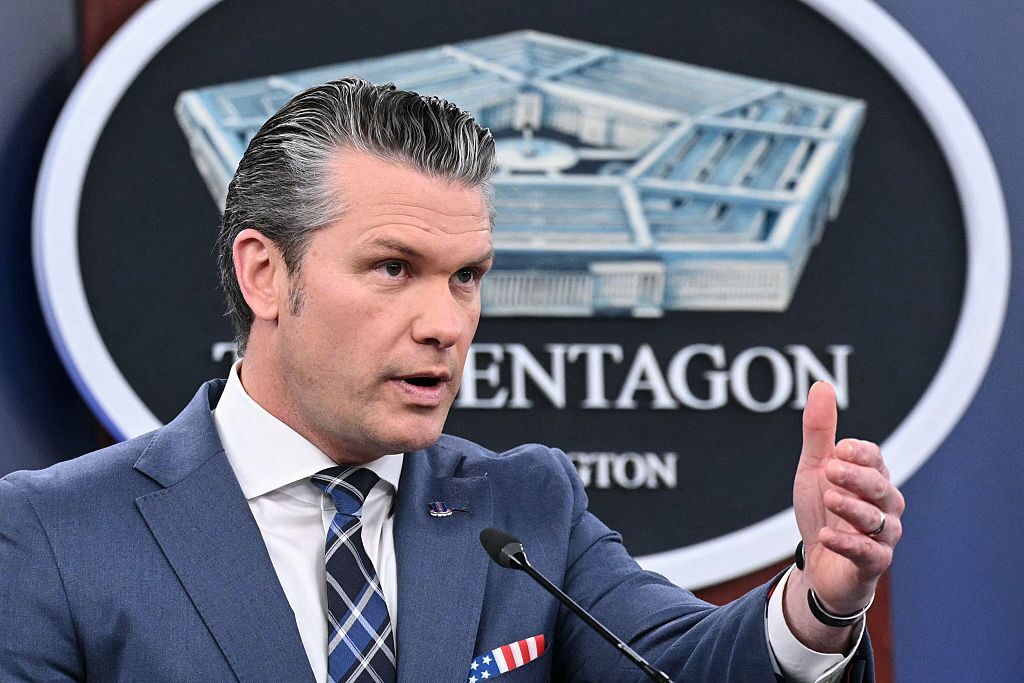
Secretary of Defense Pete Hegseth speaks during a news conference at the Pentagon on March 19.

Four Army officers were on track to become one-star generals, NPR confirms. Defense secretary Pete Hegseth's involvement in the promotion process is highly unusual.

(Image credit: Mandel Ngan)

Read the whole story
InShaneee
10 days ago
reply
Chicago, IL
Share this story
Delete
Next Page of Stories