9655 stories
·
100 followers

Are Warnings of Superintelligence 'Inevitability' Masking a Grab for Power?

1 Share
Superintelligence has become "a quasi-political forecast" with "very little to do with any scientific consensus, emerging instead from particular corridors of power." That's the warning from James O'Sullivan, a lecturer in digital humanities from University College Cork. In a refreshing 5,600-word essay in Noema magazine, he notes the suspicious coincidence that "The loudest prophets of superintelligence are those building the very systems they warn against..." "When we accept that AGI is inevitable, we stop asking whether it should be built, and in the furor, we miss that we seem to have conceded that a small group of technologists should determine our future." (For example, OpenAI CEO Sam Altman "seems determined to position OpenAI as humanity's champion, bearing the terrible burden of creating God-like intelligence so that it might be restrained.") The superintelligence discourse functions as a sophisticated apparatus of power, transforming immediate questions about corporate accountability, worker displacement, algorithmic bias and democratic governance into abstract philosophical puzzles about consciousness and control... Media amplification plays a crucial role in this process, as every incremental improvement in large language models gets framed as a step towards AGI. ChatGPT writes poetry; surely consciousness is imminent..." Such accounts, often sourced from the very companies building these systems, create a sense of momentum that becomes self-fulfilling. Investors invest because AGI seems near, researchers join companies because that's where the future is being built and governments defer regulation because they don't want to handicap their domestic champions... We must recognize this process as political, not technical. The inevitability of superintelligence is manufactured through specific choices about funding, attention and legitimacy, and different choices would produce different futures. The fundamental question isn't whether AGI is coming, but who benefits from making us believe it is... We do not yet understand what kind of systems we are building, or what mix of breakthroughs and failures they will produce, and that uncertainty makes it reckless to funnel public money and attention into a single speculative trajectory. Some key points: "The machines are coming for us, or so we're told. Not today, but soon enough that we must seemingly reorganize civilization around their arrival..." "When we debate whether a future artificial general intelligence might eliminate humanity, we're not discussing the Amazon warehouse worker whose movements are dictated by algorithmic surveillance or the Palestinian whose neighborhood is targeted by automated weapons systems. These present realities dissolve into background noise against the rhetoric of existential risk..." "Seen clearly, the prophecy of superintelligence is less a warning about machines than a strategy for power, and that strategy needs to be recognized for what it is... " "Superintelligence discourse isn't spreading because experts broadly agree it is our most urgent problem; it spreads because a well-resourced movement has given it money and access to power..." "Academic institutions, which are meant to resist such logics, have been conscripted into this manufacture of inevitability... reinforcing industry narratives, producing papers on AGI timelines and alignment strategies, lending scholarly authority to speculative fiction..." "The prophecy becomes self-fulfilling through material concentration — as resources flow towards AGI development, alternative approaches to AI starve..." The dominance of superintelligence narratives obscures the fact that many other ways of doing AI exist, grounded in present social needs rather than hypothetical machine gods. [He lists data sovereignty movements "that treat data as a collective resource subject to collective consent," as well as organizations like Canada's First Nations Information Governance Centre and New Zealand's's Te Mana Raraunga, plus "Global South initiatives that use modest, locally governed AI systems to support healthcare, agriculture or education under tight resource constraints."] "Such examples... demonstrate how AI can be organized without defaulting to the superintelligence paradigm that demands everyone else be sacrificed because a few tech bros can see the greater good that everyone else has missed..." "These alternatives also illuminate the democratic deficit at the heart of the superintelligence narrative. Treating AI at once as an arcane technical problem that ordinary people cannot understand and as an unquestionable engine of social progress allows authority to consolidate in the hands of those who own and build the systems..." He's ultimately warning us about "politics masked as predictions..." "The real political question is not whether some artificial superintelligence will emerge, but who gets to decide what kinds of intelligence we build and sustain. And the answer cannot be left to the corporate prophets of artificial transcendence because the future of AI is a political field — it should be open to contestation. "It belongs not to those who warn most loudly of gods or monsters, but to publics that should have the moral right to democratically govern the technologies that shape their lives."

Read more of this story at Slashdot.

Read the whole story
InShaneee
1 hour ago
reply
Chicago, IL
Share this story
Delete

Would You Like A TRIPLE Entendre?

1 Share
From: Vsauce
Duration: 1:02
Views: 1,905,033

Read the whole story
InShaneee
7 hours ago
reply
Chicago, IL
Share this story
Delete

New Kindle Feature Uses AI To Answer Questions About Books - And Authors Can't Opt Out

1 Share
An anonymous reader shares a report: Amazon has quietly added a new AI feature to its Kindle iOS app -- a feature that "lets you ask questions about the book you're reading and receive spoiler-free answers," according to an Amazon announcement. The company says the feature, which is called Ask this Book, serves as "your expert reading assistant, instantly answering questions about plot details, character relationships, and thematic elements without disrupting your reading flow." Publishing industry resource Publishers Lunch noticed Ask this Book earlier this week, and asked Amazon about it. Amazon spokesperson Ale Iraheta told PubLunch, "The feature uses technology, including AI, to provide instant, spoiler-free answers to customers' questions about what they're reading. Ask this Book provides short answers based on factual information about the book which are accessible only to readers who have purchased or borrowed the book and are non-shareable and non-copyable." As PubLunch summed up: "In other words, speaking plainly, it's an in-book chatbot." [...] Perhaps most alarmingly, the Amazon spokesperson said, "To ensure a consistent reading experience, the feature is always on, and there is no option for authors or publishers to opt titles out."

Read more of this story at Slashdot.

Read the whole story
InShaneee
2 days ago
reply
Chicago, IL
Share this story
Delete

Head Start centers told to avoid 'disability,' 'women' and more in funding requests

1 Comment and 2 Shares
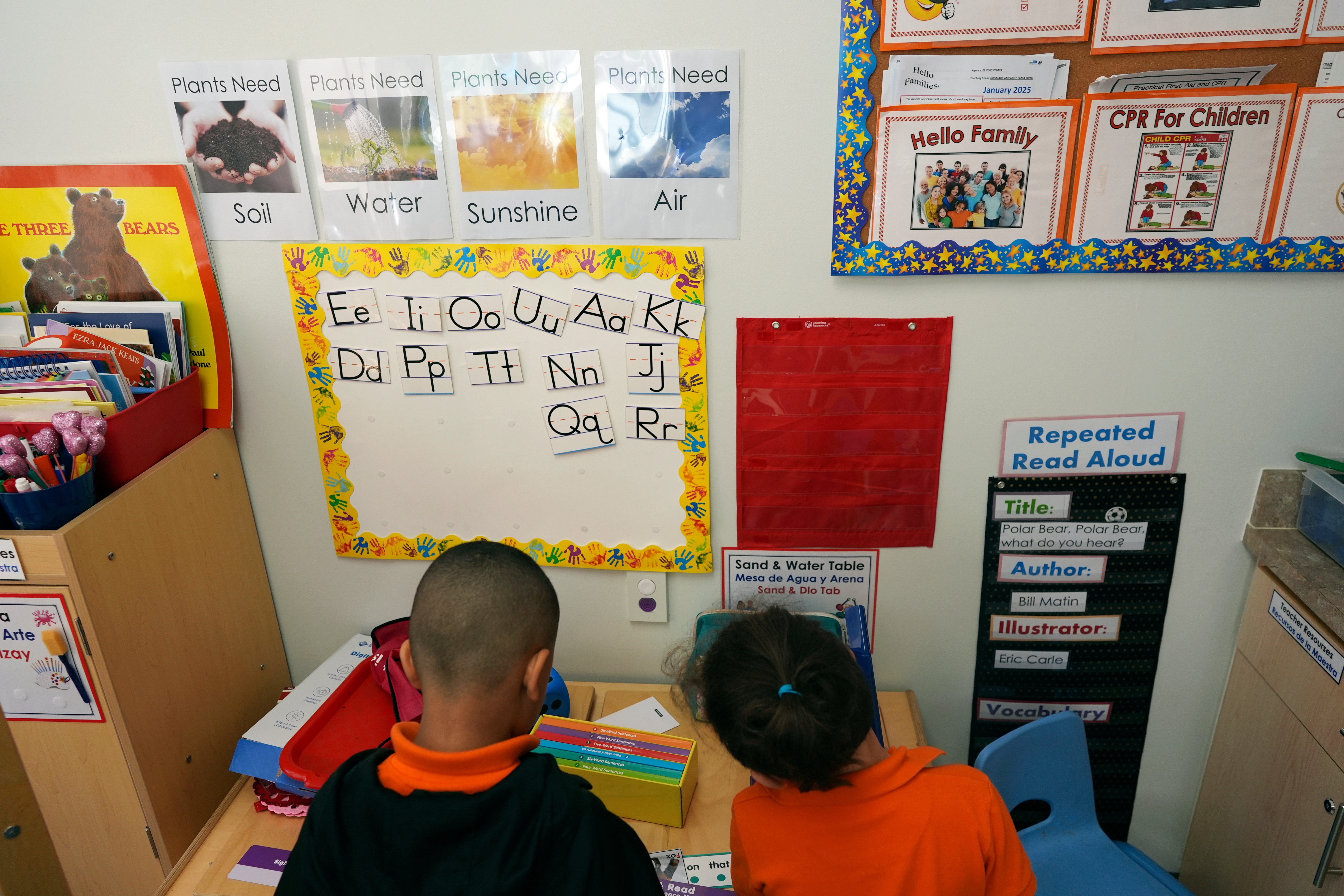
Students help put away supplies at the end of a reading and writing lesson at a Head Start program in Miami in January 2025.

New court documents reveal a list of nearly 200 words or phrases the Trump administration told Head Start programs it does not want to see in their funding requests.

(Image credit: Rebecca Blackwell)

Read the whole story
InShaneee
3 days ago
reply
Chicago, IL
Share this story
Delete
1 public comment
Gsav45
3 days ago
reply
ahahah
Gsav45
3 days ago
Hgoogoo gaga je veux mon biberon
Gsav45
3 days ago
Like et abonne toi

Disney Invests $1 Billion in the AI Slopification of Its Brand

1 Comment and 2 Shares
Disney Invests $1 Billion in the AI Slopification of Its Brand

The first thing I saw this morning when I opened X was an AI-generated trailer for Avengers: Doomsday. Robert Downey Jr’s Doctor Doom stood in a shapeless void alongside Captain America and Reed Richards. It was obvious slop but it was also close in tone and feel of the last five years of Disney’s Marvel movies. As media empires consolidate, nostalgia intensifies, and AI tools spread, Disney’s blockbusters feel more like an excuse to slam recognizable characters together in a contextless morass.

So of course Disney has announced it signed a deal with OpenAI today that will soon allow fans to make their own officially licensed Disney slop using Sora 2. The house that mouse built, and which has been notoriously protective of its intellectual property, opened up the video generator, saw the videos featuring Nazi Spongebob and criminal Pikachu, and decided: We want in.

According to a press release, the deal is a 3 year licensing agreement that will allow the AI company’s short form video platform Sora to generate slop videos using characters like Mickey Mouse and Iron Man. As part of the agreement, Disney is investing $1 billion of equity into OpenAI, said it will become a major customer of the company, and promised that fan and corporate AI-generated content would soon come to Disney+, meaning that Disney will officially begin putting AI slop into its flagship streaming product.

The deal extends to ChatGPT as well and, starting in early 2026, users will be able to crank out officially approved Disney slop on multiple platforms. When Sora 2 launched in October, it had little to no content moderation or copyright guidelines and videos of famous franchise characters doing horrible things flooded the platform. Pikachu stole diapers from a CVS, Rick and Morty pushed crypto currencies, and Disney characters shouted slurs in the aisles of Wal-Mart.

It is worth mentioning that, although Disney has traditionally been extremely protective of its intellectual property, the company’s princesses have become one of the most common fictional subjects of AI porn on the internet; 404 Media has found at least three different large subreddits dedicated to making AI porn of characters like Elsa, Snow White, Rapunzel, and Tinkerbell. In this case, Disney is fundamentally throwing its clout behind a technology that has thus far most commonly been used to make porn of its iconic characters.  

After the hype of the launch, OpenAI added an “opt-in” policy to Sora that was meant to prevent users from violating the rights of copyright holders. It’s trivial to break this policy however, and circumvent the guardrails preventing a user from making a lewd Mickey Mouse cartoon or episode of The Simpsons. The original sin of Sora and other AI systems is that the training data is full of copyrighted material and the models cannot be retrained without great cost, if at all.

If you can’t beat the slop, become the slop.

“The rapid advancement of artificial intelligence marks an important moment for our industry, and through this collaboration with OpenAI we will thoughtfully and responsibly extend the reach of our storytelling through generative AI, while respecting and protecting creators and their works,” Bob Iger, CEO of Disney, said in the press release about the agreement.

The press release explained that Sora users will soon have “official” access to 200 characters in the Disney stable, including Loki, Thanos, Darth Vader, and Minnie Mouse. In exchange, Disney will begin to use OpenAI’s APIs to “build new products” and it will deploy “ChatGPT for its employees.”

I’m imagining a future where AI-generated fan trailers of famous characters standing next to each other in banal liminal spaces is the norm. People have used Sora 2 to generate some truly horrifying videos, but the guardrails have become more aggressive. As Disney enters the picture, I imagine the platform will become even more anodyne. Persistent people will slip through and generate videos of Goofy and Iron Man sucking and fucking, sure, but the vast majority of what’s coming will be safe corporate gruel that resembles a Marvel movie.

Read the whole story
InShaneee
4 days ago
reply
Chicago, IL
Share this story
Delete
1 public comment
mkalus
4 days ago
reply
Disney really is trying to wring as much money out of things as possible. Forget if anybody actually wants or enjoys it.
iPhone: 49.287476,-123.142136

Cult Of Criterion: Pee-wee's Big Adventure

1 Share

In Cult Of Criterion, The A.V. Club highlights a new release from The Criterion Collection each month, examining the films entering an increasingly accessible film canon.

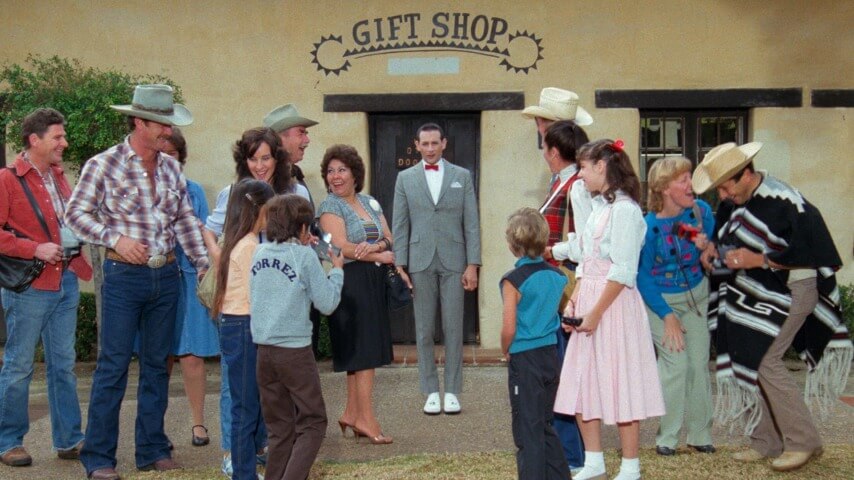
Capturing what it means to be a child doesn’t just mean blaring a zippy soundtrack over some fast-paced antics. Being a kid isn’t just about goofy energy, or naivety, or wonder. Petulance and rage simmer under the silliness, the emotional consequences to a self-involved young person’s friction with the established ways of the world. Every wide-eyed moment of discovery is matched by a narrow-eyed moment of disdain. It’s this balance of whimsy and snot, of gleeful mania and furious hysteria, of Bugs Bunny and Daffy Duck, that makes Pee-wee Herman such a perfect grown child—and makes Pee-wee’s Big Adventure such a perfect idea for the kind of journey he might dream up.

By the time Paul Reubens gave 26-year-old filmmaker Tim Burton his big break with Pee-wee’s Big Adventure, his character Pee-wee Herman had already become a comedy fixture through Reubens’ stage show, HBO special, and talk-show drop-ins. He was on The Dating Game three times! But it took Burton’s Disney-trained, Disney-rejected sensibility to fully bring Pee-wee’s world to life—and to encourage the edgy streak that pushed Big Adventure away from Reubens’ planned remake of Pollyanna. After working on The Fox And The Hound and The Black Cauldron, Burton had made a few of his own live-action shorts, pouring his fully formed, Hot Topic-defining aesthetic into a Disney Channel version of Hansel And Gretel and the project that got him fired from Disney: Frankenweenie.

The latter is what caught Reubens’ eye, despite the former’s Witch living in what looks like an evil version of Pee-wee’s Playhouse. But all of Burton’s early projects proved that their sensibilities were aligned—they wanted to play in the gray area between kid and adult, between safety and danger, between camp and sincerity, between cutting-edge hip and retro uncool. 

Both artists were obsessed with translating their experience of the past—of the wacky shows and old movies they grew up watching on TV—into a punk-inflected mid-’80s milieu. If Reubens and Burton fell asleep while Howdy Doody and a Universal Monster movie played on adjacent television sets, their shared fever dream would look a lot like Pee-wee’s Big Adventure. It’s a journey through the collective unconscious of a generation of grown American children, just immature enough to connect with an audience of actual kids.

As Jesse Thorn points out in his Criterion booklet essay, this partially takes the form of Pee-wee’s hyperreal road-trip iconography. Pee-wee, on his quest for his stolen Schwinn, zips through a country remembered from a backseat window: Truckers, diners, bikers, roadside dinosaurs and clown statues, rail-riders, drive-in theaters, and tons of cowboys, naturally, right outside the Alamo. These are the larger-than-life images zipping past you when you traverse our highway circulatory system; stuffed into a movie, and it feels like a mind-numbing slog across the country to see a kid’s grandparents has been juiced with imagination (Also, uh, Santa was there! And Godzilla!) when retold on the playground.

And Pee-wee is just the kid to tell it. In his form-fitting Glen Plaid suit and shiny Alfalfa haircut, he looks like an especially bullied kid was on his way to picture day when he got Big-ified. He’s a kid’s idea of an adult (they wear suits, right?) sneering through life, laughing at his own jokes, fighting off the advances of the girl who’s got a crush on him, and taking on bullies. He’s also a Looney Tune. For every improbable success Pee-wee pulls off with his Bugs-like cross-dressing and costume-swapping, there’s a Daffy-like plummet to earth—a moment of rage, failure, slapstick, hubris blowing up in his face. It’s Bugs who wins over the biker gang with what’s effectively a drag performance of “Tequila,” and it’s Daffy who immediately crashes a motorcycle afterward.

It’s all part of the silly-scary balance that Burton would make his kid-enticing hallmark. Creating a world not just navigated by a grown kid, but one that had a kid’s burgeoning understanding of safety and danger, Burton infused Pee-wee’s Big Adventure with fantastical threats. It’s not the escaped convicts you need to worry about, or the grumpy bikers, or the furious bulls, or even the jealous boyfriends. The terror had to also be, in its way, a punchline. From Hansel And Gretel and his short Vincent, Burton brought in stop-motion animators Rick Heinrichs and the Chiodo Brothers in order to create these playful scares. Together, they made Large Marge, whose scene is all but a movie reaching out and goosing you.

This is the thoroughly childish spirit permeating Pee-wee’s Big Adventure: The volatile, puckish, myopic-yet-charming energy of a kid recounting their day spent playing pretend. And it’s the complexity within this tone, the sourness that comes out when Pee-wee blows up at those he’s gathered to search for his bike, that situates its fantasy in reality. There’s no false schmaltz or saccharine cutesiness, none of the cloying child-courting fluff that softens so much disposable children’s media. The stray sass, the random venom, the whiplash between innocence and indignation—these are what makes Pee-wee’s Big Adventure an enduring encapsulation of childhood.


Read the whole story
InShaneee
4 days ago
reply
Chicago, IL
Share this story
Delete
Next Page of Stories