9742 stories
·
100 followers

Saying "nope" to Nvidia's "yassify" tech

1 Share

It’s called DLSS 5—that is, “Deep Learning Super Sampling,” and apparently we’re already on the fifth one. Nvidia’s plan with DLSS, at least initially, was to improve graphics on older tech that might struggle to support modern dazzle, simulating the experience of having a more powerful, expensive computer (which are, by the way, increasingly scarce). But with the fifth version of DLSS, revealed at GTC 2026, what Nvidia offers isn’t just a sharper, smoother, more impressive picture.

Using AI’s neural rendering, the gaps are hallucinated-into, ostensibly to reproduce dynamic lighting and ray-tracing. Instead, the faces of the characters Nvidia has used to demonstrate the technology—principally, Grace Ashcroft of Resident Evil Requiem—have been not only revised, but entirely replaced: casualties of what AI is being trained to think we all want. The tech industry (or rather, the humans in tech who care about the actual business, and ownership, of creative labor) has lost its absolute mind over Nvidia pushing this on us, justifiably and rightfully. We’re through the looking glass now. 

When industry veteran Will Smith called out DLSS 5 as a glorified “yassify filter,” his critique immediately entered the popular parlance. Admittedly, I’ve been a vocal skeptic of the slippery slope of arbitrating what cup size constitutes an aesthetically ‘serious’ videogame character, but even I had to immediately concede Smith’s point. DLSS 5 really has veered into the realm of “Bold Glamour”—that is, the Instagram or TikTok filter that is the direct antecedent of Mar-a-Lago face. Grace Ashcroft, by the way, is an FBI analyst. The effect is too much like walking in on your boomer mom who watches fire-department procedurals on network television. 

This raises an obvious question: Just how sexy do we really need our videogame characters to be? Is this sexy at all? It’s an uncomfortable question that goes back at least as far as Lara Croft: Tomb Raider’s polygon boobies, but which reached a fever pitch in the months and weeks right before GamerGate, when many gamers felt that game reviewers and tech critics were trying to prevent or totally outlaw sexiness in order to ruin gaming—just to be mean, to prove a point. Now, 12 years later, DLSS 5 has taken the supposed ‘side’ of that hypothetical gamer: the player who might demand maximum protagonist hotness as a sort of aesthetic default.

“This kind of tech undermines the artistic intent of countless artists, animators, lighting engineers, and designers in games,” John Warren of VGBees tells me. Indeed, this isn’t the democratization of taste; it’s the flattening of art and creative labor in favor of whatever the lowest common denominator might want. Which is something AI can only guess at, to our collective peril. This realtime “lighting” filter also diminishes, devalues, the skill of the original work. The entitlement! The extremely questionable decision-making of it all! (It also, not for nothing, introduces questions about artists’ consent and where the hell all the “fair use” laws went.)

“Imagine if this tech also decided Grace Ashcroft’s voice needed to match the visual version DLSS 5 renders,” Warren continues. “You’d laugh the person who wants that out of the room, I hope. But it’s transformational, right? Warping intent for technical ‘improvement’ is anti-art.” Warren’s point yields another very real problem: A new, yassified face grafted on top of an ‘old’ voice would be uncanny. It introduces dissonance, a strange mismatch, a conflict of two interests.

In a swiftly deleted post, likely a variation on a gag meme that in this instance felt far too true, someone had replaced Harrison Ford—that is, the face of videogame and movie hero Indiana Jones—with the absolute blandest looksmaxxed Chad, a face developed not with the artistry of human hands or hearts, but rather, by analyzing the already-blandest human faces in the world and settling on whatever horrific facemorph distortion emerges from it as the ultimate standard for male beauty: a lantern-jawed meme of a man.

Where does this lead? Nowhere good. We iterate on aesthetic standards; one minor tweak begets the next. Have you ever seen those social-media stars who’ve spent way too long using a FaceTune app? Or someone who’s had what was maybe one too many surgical revisions? Distortions echo upon other distortions, and soon you’ve passed up dysmorphia entirely, embracing something much more alien, something uncanny. This is where a disordered self-image meets your bank account: Someone will always have one more little tweak to sell you. Discernment, human intervention, is needed, because, if anything has become abundantly clear, it’s that AI cannot pump its own brakes. 

This is really what AI is all about—crowdsourcing artistic vision. Not to get too “death of the author” about it, but gamemakers’ intent really does matter less than whatever we, the players, ultimately put of ourselves into the work. And how we feel matters—we are never merely consumers of a piece of media or literature (“content”); rather, we are in constant breathing dialogue with it. That’s because the reader, or player, is a person who is alive, with their own personal context and biases. The instinct to want to challenge a piece of media, as opposed to consuming it uncritically, is a good thing.

It’s one thing to want to challenge something, and quite another to feel absolutely threatened by it, to want to seize control of it, to dominate it: to change it to suit us, seizing control of someone else’s creation, reskinning it, then assuming credit for what amounts to a fresh coat of paint. It is “mod as authorship,” except in this specific case, the mod itself is artless. (Artful mods do exist! What Nvidia is offering here is not it!)

For years, gamers have wanted to seize greater authorship, greater authority, over the games they play. That isn’t new; they’ve been sending death threats to game developers for as long as there have been games. It comes down to control issues. The initial impulse is almost understandable, if pathological. When you love something, when you value it, your instinct might be to also lay some sort of claim to it, to put it on a pedestal or in a little box, to trim it like a bonsai, to clip its wings, to feel territorial, to try to possess it: to declare war on it. To escalate threats, to saber-rattle, to enact a terror campaign until the developers and narrative designers and artists cede to a list of demands.

Already anticipating where this trail leads—how catering to this initial impulse can accelerate—games journalist Leigh Alexander wrote in 2014, effectively, “Creators, you do not have to go there,” in a piece that launched a thousand ships, inciting further mob campaigns under the auspices of a “consumer movement.” One thing quickly became apparent: We may collectively be in the thrall of billion-dollar corporations, but corporations, in turn, will absolutely defer to a mob’s will.

Here is the seductive promise of the mob, though: If anything ever goes wrong, the hope is, no one person can be blamed. The mob’s promise is the same as the promise of AI itself: an end to personal accountability, to ever being held responsible for one’s own individual thoughts, actions, behaviors, or freaky-ass desires. For good or ill, thoughts, actions, and even desires are the things that make you individually you. Those are the things to lay claim to, to own. You shouldn’t sacrifice or outsource those to the cloud or the AI or the amorphous mob. Unfortunately, AI can never be held accountable for any harms done because, very much like a mob, there’s no one ‘there.’ Moreover AI cannot give you what you want, only its best neural guess at what it thinks you want. That is to say, AI can only tell you what you want.

It seems as if there is a larger push against seeing ‘real’ people, even pretend-real people: against fictions that have the audacity to depict real physical flaws real individuals might have. Humans, the billionaire consensus seems to be, have failed you, disappointed you. Real life has failed you. Or you’re failing it. Hard to say. Imagine if you could go somewhere better, more utopian, where conversation never stalls and the girls are seriously hot, and your grandma feels alive, at least. Maybe better than alive! And there’s no friction, no cognitive load, because the AI will help you think, will even take over your thinking for you, if you start to get too tired, too pained, by all the thinky-ouchies. 

Endemic to the DLSS 5 brouhaha is this bizarre expectation of having to like everything all the time—to have every personal whim catered to. Unfortunately, with the persistent availability of on-demand Everything, the discomfort of disliking stuff can start to feel foreign, even intolerable. That is why we should all be friction-maxxing our 2026, embracing the imperfect. Maybe we, individually, can’t stop AI’s harms—therein lies the paradox, where collective action is required for sustained change—but we can each enforce checks and balances in our own lives, learning to conscientiously pump the brakes when needed.


Read the whole story
InShaneee
2 hours ago
reply
Chicago, IL
Share this story
Delete

CEO Asks ChatGPT How to Void $250 Million Contract, Ignores His Lawyers, Loses Terribly in Court

1 Share
CEO Asks ChatGPT How to Void $250 Million Contract, Ignores His Lawyers, Loses Terribly in Court

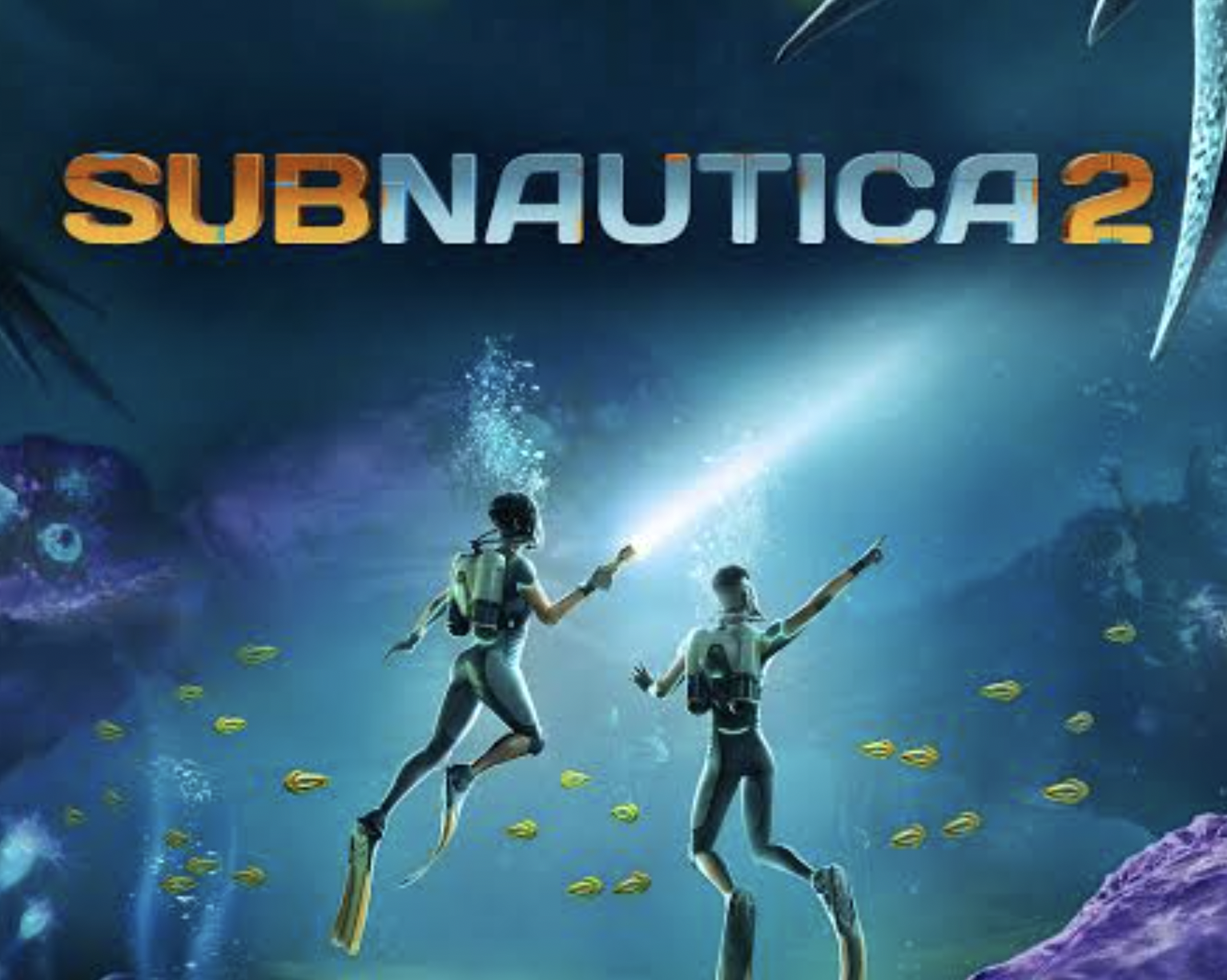
A judge ordered the reinstatement of a video game developer after he was fired as part of a scheme cooked up by a CEO using ChatGPT. Facing the possibility of paying out a massive bonus to the developer of Subnautica 2, the CEO of publisher Krafton used ChatGPT to create a plan to take over the development studio and force out its founder, according to court records.

The Monday ruling details the bizarre story. Unknown Worlds Entertainment is the studio behind the 2018 underwater survival game Subnautica. The company has since been working on the sequel, Subnautica 2. In 2021, South Korean publisher Krafton bought Unknown Worlds Entertainment for $500 million and promised to pay out another $250 million if Subnautica 2 sold well enough.

Krafton’s internal sales projections for Subnautica 2 looked great, and looked like it would be on the hook for the additional $250 million. In an attempt to avoid paying this, Krafton CEO Changhan Kim turned to ChatGPT for help avoiding paying the developers the $250 million bonus. “As Unknown Worlds prepared to release its hotly anticipated sequel, Subnautica 2, the parties’ relationship fractured,” the court decision said. “Fearing he had agreed to a ‘pushover’ contract, Krafton’s CEO consulted an artificial intelligence chatbot to contrive a corporate ‘takeover’ strategy.”

Kim partnered with Krafton Head of Corporate Development Maria Park and the company’s legal team to work out options. He toyed with finding a reason to fire the founders. According to court records, Park pinged Kim on Slack and told him that attempting to avoid paying the bonus would be legally risky. “Hi CEO . . . it seems to be highly likely that the earn-out will still be paid if the sales goal is achieved regardless of the dismissal with cause,” the Slack message said according to court records. “Therefore, there isn’t much that we can practically gain other than punishment with a simple dismissal alone, whereas I am worried that we may be exposed to lawsuit and reputation risk.”

But the CEO would not accept defeat. “And so Kim turned to ChatGPT for help,” court records said. “When the AI chatbot responded that the earnout would be ‘difficult to cancel,’ Kim complained to Park that the [payout] was a ‘contract under which we can only be dragged around.’”

Kim pressed the chatbot for an answer. “At ChatGPT’s suggestion, Kim formed an internal task force, dubbed ‘Project X.’ The task force’s mandate was to either negotiate a ‘deal’ on the earnout or execute a ‘Take Over’ of Unknown Worlds. They looked to buy time,” court records said. “Kim sought ChatGPT’s counsel on how to proceed if Krafton failed to reach a deal with Unknown Worlds on the earnout. The AI chatbot prepared a ‘Response Strategy’ to a ‘No-Deal’ Scenario.”

This was a piece of ChatGPT’s “Project X” for Krafton:

“a. Preemptive Framing - Repeat that protecting quality and fan trust is the highest priority, undermine the ‘Large Corporation VS. Indie’ framing

b. Securing Control Points -

* Lock down Steam/console publishing rights and access rights over code/build pipeline through both legal and technical aspects.

* For the earn-out freeze, keep room for negotiations through provision stating ‘immediate removal if specific development results are achieved’

a. Systematic materials for legal defense - Prepare contract interpretation memorandums, log all communications, seek external consultation
b. Team retention - Operation of retention packages for key personnel and rapid backfill pipelines in anticipation of resignation/departure scenarios
c. Two handed strategy - Create a structure that allows for both hardball (Legal+ Finance) and softball (Support/Incentives) approaches so moderate factions within Unknown Worlds can push for compromise.”

Kim followed ChatGPT’s advice rather than his lawyers’ advice, according to the court records. The first step was posting a message on Subanutica’s website to get fans on his side. According to court documents, Kim said the goal of the message was to “secure public support from fans and legal validation of our legitimacy.” He then suggested that ChatGPT write it for him. It achieved the opposite of his intended goal. Fans found the message bizarre and worried about the future of the game. Those fears were compounded when Kim fired the game’s original creators and entered into a legal battle with them.

The legal battle is ongoing, but Kim looks set to lose. The judge has ordered he reinstate the fired developers and has exposed the CEO’s flailing use of ChatGPT. Krafton told Kotaku that it was “evaluating its options” regarding the ruling and that it “puts players at the heart of every decision.”

Read the whole story
InShaneee
23 hours ago
reply
Chicago, IL
Share this story
Delete

Slay The Spire 2 lets you share your digital card game obsession with friends

1 Share

The original Slay The Spire was one of those rare games that created an obvious, almost immediate change in the industry. Before it came out, digital deckbuilders were mostly niche oddities for those suffering from Magic: The Gathering draft withdrawal. Afterwards, deckbuilders rapidly became a usual suspect on best-seller pages, with everything from small-scale studios to AAA Marvel releases trying to get in on the action. While Slay The Spire definitely wasn’t the first of its kind (video game or otherwise), it took something familiar to tabletop regulars and translated it to a different medium while maintaining its depth. Basically, it created a whole new generation of people who now spend way too much time looking up rule clarifications on card game message boards.

This trick of translating the fun of one medium to another while inspiring a wave of copycats seemed like the kind of thing you can only pull off once. So, while the announcement of Slay The Spire 2 was met with fanfare, it made sense to wonder if the sequel could innovate in the same way. It’s been almost a decade, and there have been dozens, if not hundreds, of games in this mold since 2017, so any follow-up would be hard-pressed to make the same kind of impact.

It turns out that Slay The Spire 2 has already reached about 10 times the concurrent player count compared to the original on Steam, with more than half a million people logging on at once. Right now, it’s sitting in third place on the site’s most played charts alongside Valve’s evergreen duo of Counter-Strike 2 and Dota 2. There are plenty of reasons why the game is doing so well: positive word of mouth thanks to its predecessor, the genre’s increased popularity, a long lead-up time that helped build hype, etc. But there’s also something more salient at play: The game didn’t just settle for more of the same, it added an ingenious touch that brings it back to its tabletop roots. Now you can play co-op.


Slay The Spire 2

As it stands, roguelike deckbuilders are mostly like really complicated solitaire. The player tries to put together a strong deck and outpace escalating challenges from an AI adversary. It’s a lot of fun, and one of the big upsides is the convenience factor compared to its physical counterparts: Unlike Dominion (the grandfather of the genre), you don’t need to plan a tabletop night and then convince your friends to play a bespoke German deckbuilding game about feudalism (there’s a Steam edition now where you can play against randos, but still).

It’s nice that roguelike deckbuilders let you scratch that card freak itch, but like with many digital conveniences, this comes with tradeoffs. For one, you don’t get to see the look of horror in your friend’s eyes as you hand them their 13th curse card after playing another Witch. Instead, the standard operating procedure for most deckbuilding video games is plugging away at your computer or console (usually until some ungodly hour), battling Act 4 nightmare bosses all by yourself. Slay The Spire is amazing, but, for good and bad, it took an inherently social style of game and turned it into a solo activity.

As for Slay The Spire 2, you can very much still go it alone, but it also lets you cooperate with up to three teammates. Upfront, things play out pretty similarly with a crew. Each player constructs a deck by drafting cards. Between battles and events, you pass through modules on an overview map to work towards the top of a tower. You’ll encounter high fantasy flora and fauna, treasure chests, and randomized events that sometimes feature a giant talking whale who gives you presents.

The main difference in co-op is that every time you take a turn, the rest of your party is doing the same thing. Since everyone plays their cards in unison, this mercifully gets around the long sequences in many other card games where you don’t get to do stuff. Smart little details smooth out the other problems that plague a lot of co-op board games. For instance, you can’t see every choice your partners are making, which makes it much harder to backseat drive. If you’ve played cooperative tabletop games before, you’ve probably run into cases where one or two people will commandeer the ship, giving everyone else marching orders. Here, you’ve got to make your own choices.

At the same time, coordination can make a massive difference, and being part of a team changes the context of almost every card in the game. Strategies that work great solo, like applying buffs to yourself, don’t have the same weight, while many otherwise neglected cards get a bump. An interesting balancing act comes into play, where on top of individually building a ramp to dish out big damage, you’re also thinking about your group as a whole and what cards or relics will complement everyone else’s decks. Maybe you pick up a few high-energy cost cards because a teammate can give the party some extra mana. In terms of strategy, turn order can be a big deal, and you’ll want someone applying debuffs like Vulnerable (which causes enemies to take more damage) before everyone else starts swinging in extended sequences that play out like beating a piñata. Or maybe another partner can afflict a monster with Weak, meaning you won’t need to use as many defensive cards because your enemy won’t be hitting as hard. It turns into a rare communal puzzle that requires everyone’s input.

Beyond all the crunchy design reasons why the co-op lands, this game reintroduces the social elements that its predecessor inherently leaned away from. From traditional 52-card decks to modern incarnations involving superheroes and wizards, card games have historically brought people together (even if you’re regretting that after getting stomped by a cheap meta deck or losing cash in a disastrous round of poker). In that tradition, this game’s turn-based monster slaying makes it a great way to hang out, shoot the shit, and build an unstoppable monsters-smashing engine: There’s something very satisfying about showing off your positively busted combos to your friends. It may not be the first co-op deckbuilder—Across The Obelisk and Aeon’s End did it earlier for video games, while Marvel Legendary and a bunch of others did this for the tabletop—but like its predecessor, it took a somewhat niche concept and honed it into something special. Slay The Spire 2 continues the tradition of wreaking havoc on sleep schedules, but now at least you won’t be the only one rolling into work with bloodshot eyes and a hankering for the next deep run.


Read the whole story
InShaneee
23 hours ago
reply
Chicago, IL
Share this story
Delete

New Documentary Exposes the Truth Behind That 1967 'Bigfoot' Footage

1 Share
There's a surprise in a new documentary about that Bigfoot film shot in 1967 by Roger Patterson, reports the Wall Street Journal. Capturing Bigfoot "builds to a big reveal: freshly surfaced film that appears to show a woodsy dress rehearsal for one of the world's most enduring hoaxes." In the new footage — from a Kodak reel dating to 1966 — Patterson's camera tracks a man in costume, his brother-in-law, moving in a similar fashion to the figure in the 1967 shoot, which featured a different location and a bigger man with a more distinctive stride, according to the documentary. The test-run footage "is the work of a director with a vision," says Capturing Bigfoot director Marq Evans. He says the reel was given to him by a colleague at Olympic College in Bremerton, Wash., where Evans runs a documentary film program. The colleague found the film in a safe that belonged to her late father, who worked in a Boeing film lab and could have developed film discreetly. With the long-buried footage in hand, Evans set out to explore the ripple effects from the Bigfoot film. Patterson, who died in 1972, hailed from the same region of Washington as Evans; the documentarian discovered that the hardscrabble cowboy had also been a gifted craftsman and artist. Patterson illustrated a self-published book, "Do Abominable Snowmen of America Really Exist?", and set out to make a wildlife movie that would feature the ultimate trophy footage. He and his collaborators inadvertently helped spawn "this massive culture and industry" around the Bigfoot legend, Evans says... Roger Paterson presented his footage to America in a traveling show that crisscrossed the nation and climaxed with the hyped Bigfoot sequence on screen. The money poured in, leading to resentment among cohorts who felt they'd been shortchanged, none more so than Bob Gimlin, Patterson's wingman in the field during the infamous shoot.. [Roger's son] Clint Patterson says his mother privately confirmed his suspicions that the family's claim to fame was bogus, but he kept quiet to protect their financial stream. About 10 years ago, when he first wanted to go public with the truth, his mother disowned him. Bigfoot was also a recurring character on the 1970s TV show The Six Million Dollar Man. Which kind of puts the whole thing in perspective...

Read more of this story at Slashdot.

Read the whole story
InShaneee
1 day ago
reply
Chicago, IL
Share this story
Delete

7th Saga: Edited Edition

1 Share
Have you ever wanted to play The 7th Saga with clear words that made more sense? Now you can. This is an editing pass on the English translation of 7th Saga. It smooths many of the rough edges by...
Read the whole story
InShaneee
2 days ago
reply
Chicago, IL
Share this story
Delete

A recent sex crime scandal could (and should) cause true reform in the manga industry

1 Share

[Editor’s note: This article contains descriptions of sexual assault and dehumanization.]

A longstanding manga industry injustice is back in the spotlight: Prominent publications have repeatedly and knowingly platformed authors convicted of sex crimes against children. On February 27, the editorial department behind MangaOne, a digital manga service, revealed they had allowed manga author Kazuaki Kurita (more widely known as Shōichi Yamamoto) to publish works under a pen name after he was convicted of a sex crime in 2020. The publication’s parent company, Shogakukan, gave this information after a civil lawsuit found Kurita guilty of abusing a female high school student. The company’s investigation also discovered that an editor at MangaOne attempted to help Kurita reach an out-of-court settlement with the victim.

The news sent a shockwave through the manga sphere, as several authors associated with the service, like ONE (Mob Psycho 100, One Punch Man), called out MangaOne for negligence and lobbied to have their series removed from the service. Then, Shogakukan revealed that MangaOne had an additional author who had been convicted of a sex crime working under a pen name, Tatsuya Matsuki (Act-age). It’s not just this service either, and other publications have stood by authors convicted of abusive acts.

As for Kazuaki Kurita, in 2020, he was arrested, indicted, and fined for violating the Child Prostitution and Pornography Prohibition Act before being ordered to pay a 300,000 yen penalty (roughly $2,700 at the time). Kurita had a series, Daten Sakusen, running in MangaOne under his first pen name, Shōichi Yamamoto. It went on hiatus the same month as his arrest, with the publisher saying the author was suffering from “health issues.” In 2022, it was removed from the service and rights were handed over to Kurita. The same year, MangaOne started to run a new series he was working on, Joujin Kamen, under his second pen name, “Hajime Ichiro.” Not only was the publication aware of his true identity, but at least one editor directly intervened on Kurita’s behalf in the case that would eventually rule against him on February 20, 2026. That editor was added to a LINE group chat with Kurita and the victim, and proposed that the author pay a 1.5 million yen fee as a settlement (around $13,700 at the time). The victim didn’t agree, eventually leading to a civil lawsuit where Kurita was ordered to pay 11 million yen (approximately $71,000). 

The victim met Kurita at a private high school where he was a teacher, and she was a student. She said that when she was 15, he groped her after offering to drive her home. Then, when she was 16, he invited her to a hotel where he raped her for the first time. According to Ashita no Keizai Shimbun, the lawsuit also stated that Kurita forced her into increasingly degrading acts that included taking pictures with the word “slave” written on her body and eating excrement as “punishment.” The victim said she felt forced to comply because “refusing would jeopardize her high school life” and that she “didn’t know what would happen if she refused when alone with him in a closed room.” She would later be diagnosed with post-traumatic stress disorder and dissociative identity disorder. Kurita admitted to having a relationship with the victim, but argued that it was “consensual” despite her being 15 the first time he assaulted her. In a statement after the ruling, the victim discussed how Kurita had deliberately acted like a father figure and groomed her.

The fact that Kurita’s editor not only knew about at least some of these allegations but also tried to help him buy the victim’s silence shows how abusive creators are both permitted and actively enabled to conduct this behavior in the manga industry. Whether the editor was attempting to sweep this clear case of grooming under the rug so they could get back to business or because they simply didn’t believe the victim, it’s clear that in some manga editors’ eyes, being credibly accused of sexually abusing children isn’t enough to sever ties.

This wasn’t the only case where MangaOne‘s editorial staff disregarded sexual abuse allegations, and an internal investigation by its parent company, Shogakukan, found that the publication had another author who was a convicted sex offender. Tatsuya Matsuki, who wrote the manga Act-age for the publication Weekly Shonen Jump, admitted to groping a middle school student in public before fleeing on a bicycle. He received an 18-month sentence, with a three-year suspended sentence. After the suspended sentence expired without Matsuki serving jail time, he was interviewed by an editor at MangaOne, and with the editor-in-chief’s approval, was allowed to begin a new series, Seisō no Shinri-shi, under the pen name Miki Yatsunami. Matsuki apparently suggested using the pen name, claiming it was to avoid reminding the victim of the incident. These circumstances are different in that Matsuki had apparently undergone rehabilitation related to his sentencing and claimed he used a pseudonym to avoid hurting the victim, but his actions, combined with those of several MangaOne editors, still come across as a deliberate attempt to deceive the public and avoid backlash.

MangaOne isn’t the only manga publication that has platformed authors convicted of sex crimes related to children: The best-selling manga magazine of all time, Weekly Shonen Jump (One Piece, Naruto, Dragon Ball, etc.), has done this repeatedly. Manga author Mitsutoshi Shimabukuro was arrested for soliciting sex from a minor in 2002, but Weekly Shonen Jump published several of his works after the fact, such as Chingiri, Build King, and his most well-known comic, Toriko. There’s also Nobuhiro Watsuki, the author of Shonen Jump’s popular Rurouni Kenshin, who was arrested in 2017 for possessing dozens of DVDs containing child pornography. After paying a fine, the magazine allowed him to come back to work on Rurouni Kenshin: The Hokkaido Arc just eight months after the arrest.

These incidents point to a pattern: Many editors at these magazines did not view sex crime convictions as something that should disqualify these authors from serialization. In response to the controversy, MangaOne’s editorial staff put out a statement clarifying that, in the case of Matsuki, they didn’t believe “he should be denied the possibility of aiming for reintegration into society” (translation from Google Translate). Even if that’s true, he shouldn’t have been allowed to duck responsibility by publishing anonymously. In the case of Watsuki, he didn’t even have to go through the trouble of dealing with cancellations and pen names, because Shonen Jump handed him back his popular series right after he was sentenced. This lack of consequences in both the manga sphere and the Japanese criminal justice system—none of the previously mentioned convictions resulted in actual jail time—establishes a structure of complicity where victims are left out to dry.

After Watsuki was convicted, Shonen Jump put together a 30th anniversary celebration for Rurouni Kenshin. A long list of the magazine’s biggest names drew tribute art, such as Eiichiro Oda (One Piece), Hirohiko Araki (JoJo’s Bizarre Adventure), Gege Akutami (Jujutsu Kaisen), Masashi Kishimoto (Naruto), Yoshihiro Togashi (Hunter x Hunter), and dozens more. None of them publicly spoke out against the author. In response to the more recent MangaOne controversies, animator Ikuo Gesu offered a particularly telling reaction on X (translation provided by Anime Updates): “Expecting manga artists to be pure, spotless, sacred, pristine figures… man, the world’s really changed. And not in a good way.” Even beyond whatever “cancel culture is bad”-related point Gesu was trying to make, it is essential to avoid platforming authors like Kurita because they can use their position to ensnare vulnerable people. According to reporting from Lawyer JP News, Kurita used his status as a published manga artist to groom his victim, who had wanted to enter the field. He allegedly told her things like “I’ll tell you about manga” and “I’ll tell you some behind-the-scenes stories” when he invited her to private locations off school grounds. Sexual predators like Harvey Weinstein have used a similar tack, using their power and influence in the entertainment industry to coerce their victims with promises of helping them break through in an extremely competitive field.

If there’s a thin silver lining in the MangaOne scandal, it’s that numerous creators have pulled their series from the app in response, showing that many in the industry are disgusted with these circumstances. Authors like Sumito Oowara (Keep Your Hands Off Eizouken!), Ryuhei Tamura (Cosmos), and more have condemned MangaOne and had their series either removed or suspended from the service. Eno Akemi, another author serialized in the publication, drew attention to the controversy on their blog and called out several editors who enabled Kurita by name. 

While only time will tell if this backlash leads to meaningful change in the industry, manga publications can begin with a very simple step: Don’t platform people who have been convicted of sexually abusing children. That would seem a straightforward ask, but in a world where the rich and powerful named in the Epstein files have largely evaded justice, it will likely take continued financial blowback and brave people willing to put their livelihoods on the line to make that happen.


Read the whole story
InShaneee
3 days ago
reply
Chicago, IL
Share this story
Delete
Next Page of Stories